About
FAQ's
All you need to know about a bespoke holiday to Morocco...
Morocco
1. We are in our 28th year specialising in tailor made Morocco holidays.
Naturally Morocco believes in offering authentic experiences of Moroccan life, while respecting and promoting local culture and environment.
Over the years we have accumulated tens of thousands of very happy customers, many of whom return time and time again. Please read some of our Customers' Reviews or check us out on Facebook and Trust Pilot.
2. We provide a Friendly, Personal and Expert service - we know and love Morocco!
Naturally Morocco's holidays are all about you, that's why our holidays are 100% tailor-made. Your entire holiday is designed around your requirements - starting with careful planning, our experienced staff will carefully guide you through the entire process to ensure that you have an enjoyable holiday in this fascinating country. You are always in good hands and we are here to help you at any time.
3. We Know our Suppliers
All our suppliers are hand picked by our experienced travel consultants to ensure that we know what we are selling and that it meets your needs. Our suppliers work with us closely to ensure you get a great holiday.
4. All our suppliers from Riad Owners to Trekking Guides are Fully Insured
5. Financial Protection
All flight-inclusive trips are ATOL protected (6228).
6. 24/7 emergency UK contact number while abroad.
Naturally Morocco believes in offering authentic experiences of Moroccan life, while respecting and promoting local culture and environment.
Over the years we have accumulated tens of thousands of very happy customers, many of whom return time and time again. Please read some of our Customers' Reviews or check us out on Facebook and Trust Pilot.
2. We provide a Friendly, Personal and Expert service - we know and love Morocco!
Naturally Morocco's holidays are all about you, that's why our holidays are 100% tailor-made. Your entire holiday is designed around your requirements - starting with careful planning, our experienced staff will carefully guide you through the entire process to ensure that you have an enjoyable holiday in this fascinating country. You are always in good hands and we are here to help you at any time.
3. We Know our Suppliers
All our suppliers are hand picked by our experienced travel consultants to ensure that we know what we are selling and that it meets your needs. Our suppliers work with us closely to ensure you get a great holiday.
4. All our suppliers from Riad Owners to Trekking Guides are Fully Insured
5. Financial Protection
All flight-inclusive trips are ATOL protected (6228).
6. 24/7 emergency UK contact number while abroad.
Naturally Morocco has sent many thousands of guests to Morocco over the years and we have never had a report of a visitor having safety issues or of threatening behaviour towards them during their stay; the vast majority of visitors find Morocco to be a hospitable and friendly country.
Fears Over Fundamentalism In Islam Worldwide
Morocco is an Islamic country and in recent years we have seen many problems reported in the western press regarding fundamentalism in Islam across the world.
The vast majority of Moroccans are non-denominational Muslims, hence the country is not affected by inter-sect divisions, the cause of much of the issue elsewhere.
That said, it is never appropriate to give an absolute guarantee of safety to visitors to any country. Unfortunately unrest affects many countries across the world - from London and New York to Bali and Peru. Casablanca was hit by suicide bomb attacks in May 2003 and Marrakech hit by a bomb in April 2011.
Take Normal Precautions And Enjoy The Wonders Of Morocco
Morocco is a wonderful country to explore but, as in any foreign country in any part of the world, it is important that visitors take normal precautions - for instance protecting their valuables in crowded areas and women should not walk alone through small alleys late at night. If in doubt, your local staff can advise you about a specific concern.
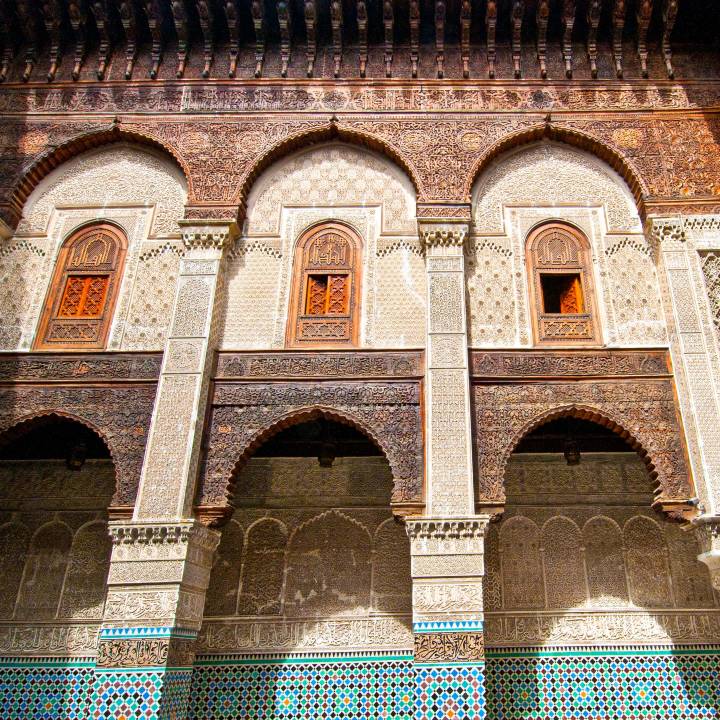
Morocco has a wealth of beautiful old buildings; however many are not maintained to European standards and some, especially constructed of earth, may lack structural integrity especially after inclement weather. If in doubt about the safety of a particular building, please discuss your concerns with local staff.
Fears Over Fundamentalism In Islam Worldwide
Morocco is an Islamic country and in recent years we have seen many problems reported in the western press regarding fundamentalism in Islam across the world.
The vast majority of Moroccans are non-denominational Muslims, hence the country is not affected by inter-sect divisions, the cause of much of the issue elsewhere.
That said, it is never appropriate to give an absolute guarantee of safety to visitors to any country. Unfortunately unrest affects many countries across the world - from London and New York to Bali and Peru. Casablanca was hit by suicide bomb attacks in May 2003 and Marrakech hit by a bomb in April 2011.
Take Normal Precautions And Enjoy The Wonders Of Morocco
Morocco is a wonderful country to explore but, as in any foreign country in any part of the world, it is important that visitors take normal precautions - for instance protecting their valuables in crowded areas and women should not walk alone through small alleys late at night. If in doubt, your local staff can advise you about a specific concern.
Morocco has a wealth of beautiful old buildings; however many are not maintained to European standards and some, especially constructed of earth, may lack structural integrity especially after inclement weather. If in doubt about the safety of a particular building, please discuss your concerns with local staff.
Naturally Morocco creates tailor made holidays. We focus on Riad and Kasbah style accommodation, which we personally select - call our experts now on 01239 710 814 to discuss your trip or to get a quote.
Morocco is a hospitable country only around 3.5 hours' flight from the UK.
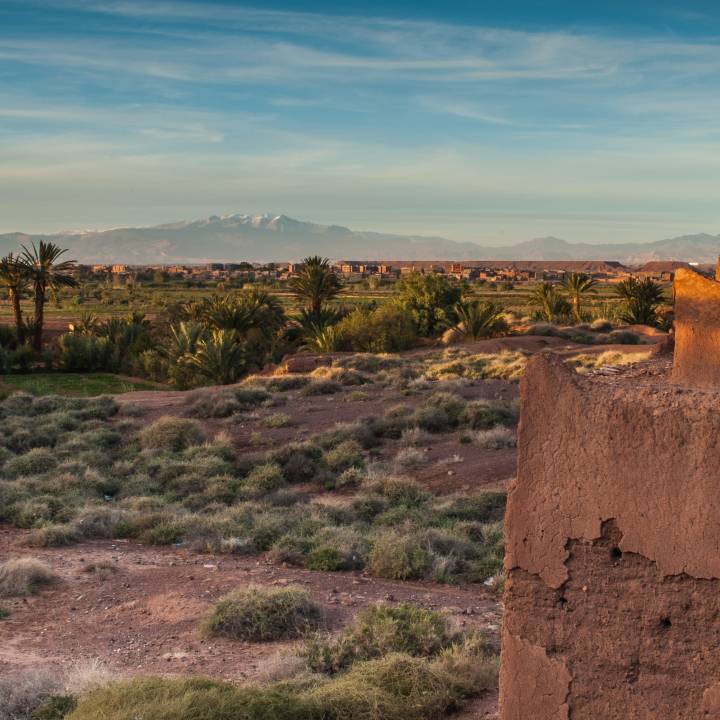
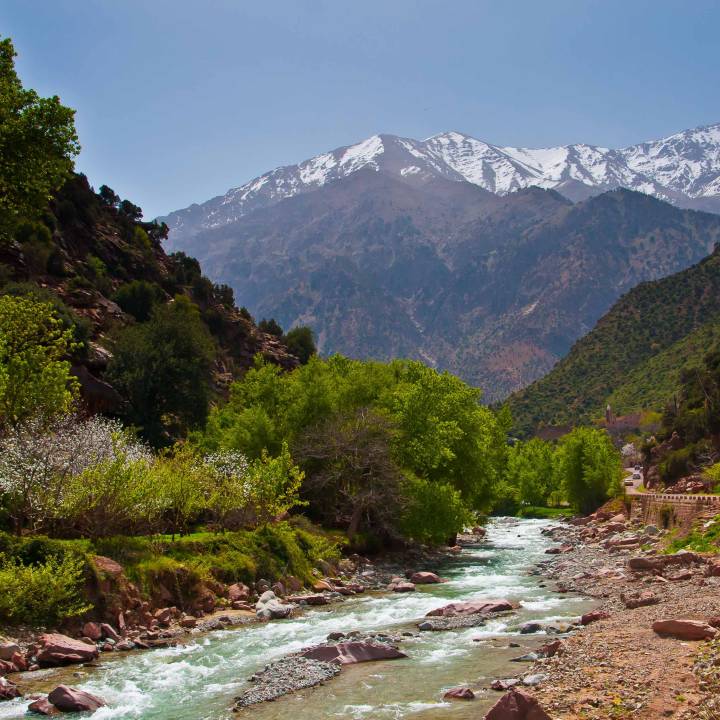
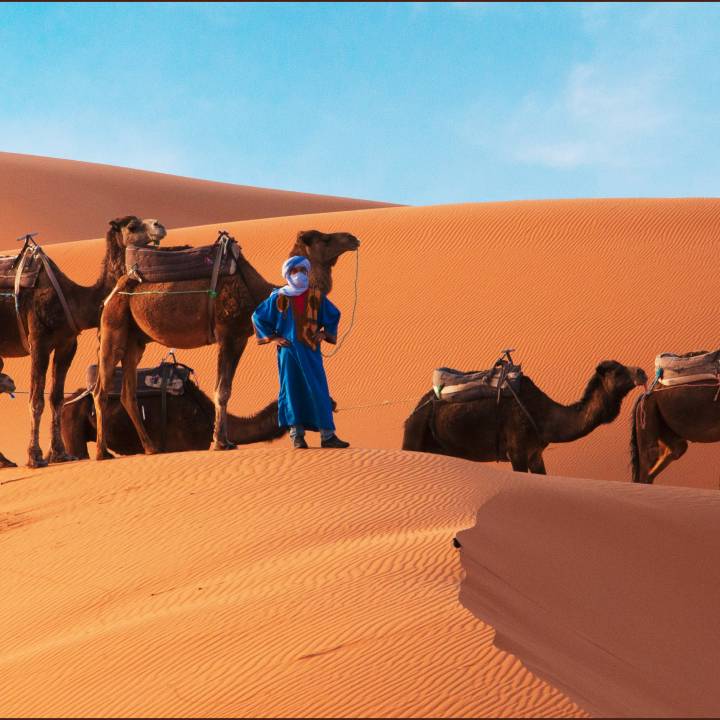
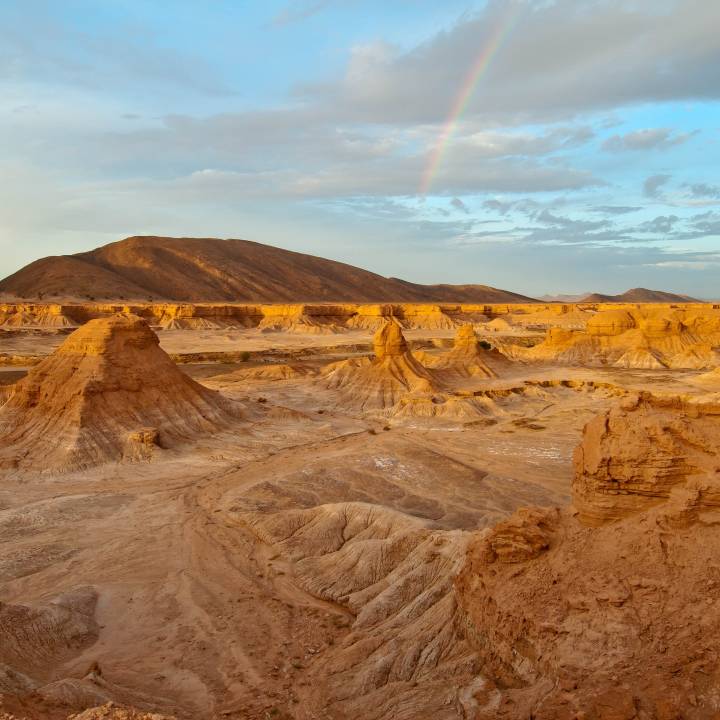
It has a huge range of scenery, ranging from the Saharan desert across the Atlas Mountains to the Atlantic coast, with stunning towns and cities.
The weather is also generally temperate, making it a holiday destination throughout the year, but in mid winter and mid summer you should choose your destination carefully.
Morocco has a culture vastly different from Europe, blending Arab, Berber and Islamic influences into a warm and welcoming environment..
Visit our page about Why Morocco is a great holiday destination.
Morocco is a hospitable country only around 3.5 hours' flight from the UK.
It has a huge range of scenery, ranging from the Saharan desert across the Atlas Mountains to the Atlantic coast, with stunning towns and cities.
The weather is also generally temperate, making it a holiday destination throughout the year, but in mid winter and mid summer you should choose your destination carefully.
Morocco has a culture vastly different from Europe, blending Arab, Berber and Islamic influences into a warm and welcoming environment..
Visit our page about Why Morocco is a great holiday destination.
Riads or Ryads are eighteenth or nineteenth century family houses, usually found in the medinas of the major towns and cities in Morocco such as Marrakech, Essaouira and Fez.
Now often converted into boutique hotels or maison d'hotes, they offer visitors to Morocco the chance to stay in authentic and often luxurious Moroccan accommodation hidden away behind unassuming front doors.
Riads are typically 4-10 bedrooms in size, and conform to a traditional Moroccan architectural style that sets most of the major rooms of the house around a courtyard. The courtyards often contain a garden or small swimming or plunge pool, and gives guests a cool and private inner area within the property. Most also have rooftop terraces providing views across the surrounding town or countryside.
Riads typically include breakfast in the quoted room rates, and many offer an optional lunch and dinner in informal courtyard dining areas or salons.
The vast majority of the properties in our collection have been refurbished or upgraded to provide modern furnishings and amenities, with owners each developing a unique style based around a modern, old world or traditional theme that delivers a broad diversity of choice.
Dars have a similar is structure to riads, but are often larger and do not necessarily have a courtyard. The term dar is often used interchangeably with riad. Example's can be found at Dar Mounir in Chefchaouen and Dar Ayniwen in the Marrakech Palmeraie.
Now often converted into boutique hotels or maison d'hotes, they offer visitors to Morocco the chance to stay in authentic and often luxurious Moroccan accommodation hidden away behind unassuming front doors.
Riads are typically 4-10 bedrooms in size, and conform to a traditional Moroccan architectural style that sets most of the major rooms of the house around a courtyard. The courtyards often contain a garden or small swimming or plunge pool, and gives guests a cool and private inner area within the property. Most also have rooftop terraces providing views across the surrounding town or countryside.
Riads typically include breakfast in the quoted room rates, and many offer an optional lunch and dinner in informal courtyard dining areas or salons.
The vast majority of the properties in our collection have been refurbished or upgraded to provide modern furnishings and amenities, with owners each developing a unique style based around a modern, old world or traditional theme that delivers a broad diversity of choice.
Dars have a similar is structure to riads, but are often larger and do not necessarily have a courtyard. The term dar is often used interchangeably with riad. Example's can be found at Dar Mounir in Chefchaouen and Dar Ayniwen in the Marrakech Palmeraie.
Although Moroccan climate is generally hot and dry, there is a such a varied climate (snow capped peaks to scorching desert dunes) that there is always somewhere to go at any time of year; however, July and August can be very hot inland away from the mountains. During Ramadan travelling can be more complicated and service may not be as good when people are hungry and thirsty but, in our experience, it is an interesting time to visit.
Even in the depths of winter the sun tends to produce very pleasant warmth during the middle of the day. However, you should note that there can be a great contrast between day and night temperatures.
The Atlantic coastal region, including Essaouira, has the most consistently warm temperatures throughout the year, without the summer peaks. Marrakech, Fez and Ouarzazate, being inland, have a hotter summer. Taroudant in the south is the warmest place in between October and April. Ouarzazate and the deep desert are best visited in the spring and autumn to avoid extremes.
In the lowlands rainfall totals are about a third of the driest parts of the UK. We can virtually guarantee no rain in May-Sept in the lowlands. When it does rain, people are so overjoyed to see it, that it is quite a novelty for those of us from wetter climes. Rain tends to be heavy and shortlasting rather than drizzle.
See also: Weather
Even in the depths of winter the sun tends to produce very pleasant warmth during the middle of the day. However, you should note that there can be a great contrast between day and night temperatures.
The Atlantic coastal region, including Essaouira, has the most consistently warm temperatures throughout the year, without the summer peaks. Marrakech, Fez and Ouarzazate, being inland, have a hotter summer. Taroudant in the south is the warmest place in between October and April. Ouarzazate and the deep desert are best visited in the spring and autumn to avoid extremes.
In the lowlands rainfall totals are about a third of the driest parts of the UK. We can virtually guarantee no rain in May-Sept in the lowlands. When it does rain, people are so overjoyed to see it, that it is quite a novelty for those of us from wetter climes. Rain tends to be heavy and shortlasting rather than drizzle.
See also: Weather
Morocco has one of the best road networks in Africa: currently new highways being built between major centres, vastly improving the speed of connections; however the roads can be surprisingly slow in remoter areas, especially the mountains.
Comfortable, air conditioned coaches linking the major cities are available but we advise that tickets must be pre-purchased.
Although taxis can be hired on the streets at relatively modest cost in towns, we recommend using taxis with our trusted drivers for any longer trips.
Car hire is another option; we recommend hiring a driver, since road signs are poor and driving skills are different.
Railways link all the cities north of Marrakech including Rabat, Tangier, Meknes and Fes; trains are highly recommended for speed and cost and, in the case of first class, for comfort.
See also: Internal Travel
Comfortable, air conditioned coaches linking the major cities are available but we advise that tickets must be pre-purchased.
Although taxis can be hired on the streets at relatively modest cost in towns, we recommend using taxis with our trusted drivers for any longer trips.
Car hire is another option; we recommend hiring a driver, since road signs are poor and driving skills are different.
Railways link all the cities north of Marrakech including Rabat, Tangier, Meknes and Fes; trains are highly recommended for speed and cost and, in the case of first class, for comfort.
See also: Internal Travel
We think so.
There is no accounting for people's tastes, but Moroccan food is widely regarded as delicious; a healthy diet, drawing from Arab, Berber, Jewish, African and French traditions, using a distinctive blend of fresh produce and spices, herbs and nuts there is a large array of unique culinary delights. Morocco's cuisine reflects the extensive range of home produced ingredients and reflects the culture of Morocco.
Care should be taken with food hygiene, especially in hot weather, and it is wise to eat only at recommended restaurants or choose food well cooked in the conical clay dishes known as tagines; you can choose from a great variety of meat or vegetarian dishes, all mildly spiced and with flavour intensified by the cooking method) and wonderful fresh salads (all food is picked and bought just before preparing meals in Morocco). There is an abundance of locally grown fresh fruit and vegetables (including dates, oranges, bananas, figs, melons, avocados etc.) which are used imaginatively with spices, herbs and oils produced locally such as argan oil, an exquisite orange nutty flavoured oil. Round Moroccan flat bread is excellent, its flavour improved by the sourdough starter.
The most popular drinks are mint tea and fresh orange juice and bottled water is widely available and safe to drink. Tap water is cities and towns is chlorinated and generally considered safe to drink but in rural areas it is inadvisable to drink tap water.
See also: Cookery.
There is no accounting for people's tastes, but Moroccan food is widely regarded as delicious; a healthy diet, drawing from Arab, Berber, Jewish, African and French traditions, using a distinctive blend of fresh produce and spices, herbs and nuts there is a large array of unique culinary delights. Morocco's cuisine reflects the extensive range of home produced ingredients and reflects the culture of Morocco.
Care should be taken with food hygiene, especially in hot weather, and it is wise to eat only at recommended restaurants or choose food well cooked in the conical clay dishes known as tagines; you can choose from a great variety of meat or vegetarian dishes, all mildly spiced and with flavour intensified by the cooking method) and wonderful fresh salads (all food is picked and bought just before preparing meals in Morocco). There is an abundance of locally grown fresh fruit and vegetables (including dates, oranges, bananas, figs, melons, avocados etc.) which are used imaginatively with spices, herbs and oils produced locally such as argan oil, an exquisite orange nutty flavoured oil. Round Moroccan flat bread is excellent, its flavour improved by the sourdough starter.
The most popular drinks are mint tea and fresh orange juice and bottled water is widely available and safe to drink. Tap water is cities and towns is chlorinated and generally considered safe to drink but in rural areas it is inadvisable to drink tap water.
See also: Cookery.
The simple answer is no but, as when a guest in any country, an attempt to converse in the native language is much appreciated by the locals.
Staff in most riads, particularly those in the bigger towns and cities, are multi-lingual speaking English, French, Spanish and Arabic and maybe Berber too. In the more rural communities Arabic, Berber and French tend to dominate. In the far north Spanish is widely understood.
Most urban Moroccans understand some English; however, you should not assume that English will be understood and it can also be useful to know some French.
Staff in most riads, particularly those in the bigger towns and cities, are multi-lingual speaking English, French, Spanish and Arabic and maybe Berber too. In the more rural communities Arabic, Berber and French tend to dominate. In the far north Spanish is widely understood.
Most urban Moroccans understand some English; however, you should not assume that English will be understood and it can also be useful to know some French.
Naturally Morocco promotes responsible tourism - Morocco is an Islamic country, therefore we advise that the normal dress code on the streets is to cover legs, chest and arms for both men and women but in the major cities long shorts and T-shirts may be worn. Head scarfs for women need not be worn except if entering a mosque (your guide will advise).
Just because other tourists may not be so respectful does not mean that the local Moroccans are comfortable with their attire.
Although the dress code is much more relaxed than it used to be, please don't assume that you won't offend because do not respect this code. It is fine to wear shorts/swimwear in certain places, such as within your riad, by pools and near the beach.
Staff will be happy to advise you of the protocol at each place.
Though the days can be very warm between late October and April, it is usually cold at night, especially in the mountains,
Just because other tourists may not be so respectful does not mean that the local Moroccans are comfortable with their attire.
Although the dress code is much more relaxed than it used to be, please don't assume that you won't offend because do not respect this code. It is fine to wear shorts/swimwear in certain places, such as within your riad, by pools and near the beach.
Staff will be happy to advise you of the protocol at each place.
Though the days can be very warm between late October and April, it is usually cold at night, especially in the mountains,
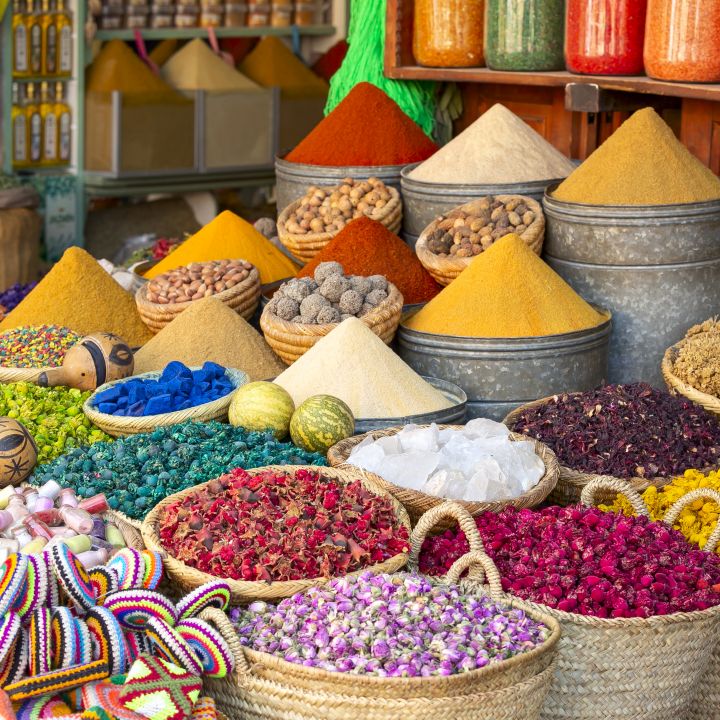
Most Moroccan produced goods are remarkably good value but imported items are relatively expensive. You may be tempted by the wonderful range of crafts for sale in the souks (market); these are usually good value if you haggle for them.
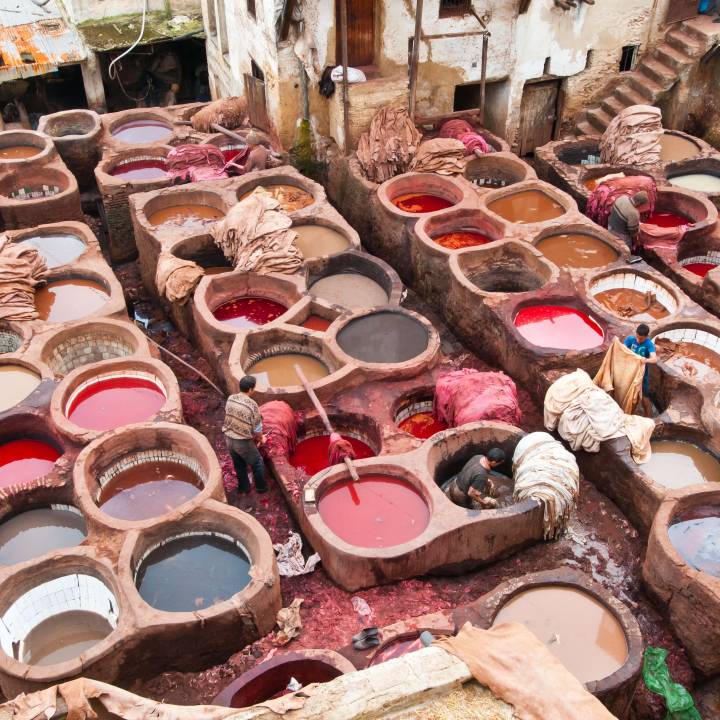
Typical Moroccan produce includes hand crafted leather goods, particularly leather sandals, carpets, and various food stuffs, particularly argan oil, dates, walnuts, almonds, and spices (although not produced locally, brought into Morocco in bulk).
Bargaining or haggling in a souk should be an enjoyable part of the cultural experience. It should not be stressful, nor designed to get the last Dirham off the asking price, but rather a cordial process to get to a price where both you and the tradesman are comfortable. Ensure you have enough time to walk away from a discussion for a while, but once a price is agreed on after a reasonable period of haggling, it is very rude then to walk away without going through on the deal.
See also: Souks and Shopping.
Typical Moroccan produce includes hand crafted leather goods, particularly leather sandals, carpets, and various food stuffs, particularly argan oil, dates, walnuts, almonds, and spices (although not produced locally, brought into Morocco in bulk).
Bargaining or haggling in a souk should be an enjoyable part of the cultural experience. It should not be stressful, nor designed to get the last Dirham off the asking price, but rather a cordial process to get to a price where both you and the tradesman are comfortable. Ensure you have enough time to walk away from a discussion for a while, but once a price is agreed on after a reasonable period of haggling, it is very rude then to walk away without going through on the deal.
See also: Souks and Shopping.
We offer Self Drive & Escorted Tours (Car Hire, Taxi and 4x4 Hire). In order to get the best out of your trip, we advise having a driver and suggest self drive car hire for experienced drivers only.
Self drive is a option for the more adventurous since driving in Morocco is an acquired skill, with some unusual rules of the road (especially around cities and major towns), roads of very variable quality especially in the mountains and only sporadic road signs.
Self drive is a option for the more adventurous since driving in Morocco is an acquired skill, with some unusual rules of the road (especially around cities and major towns), roads of very variable quality especially in the mountains and only sporadic road signs.
Moroccan law prohibits smoking in most public buildings. At your accommodation, there will usually be an area (e.g. roof terrace) where smoking is permitted.
Although Muslims are forbidden to drink alcohol, Morocco is a moderate Islamic country and you are likely to feel free to drink in moderation in private or where alcohol is being served.
In medinas alcohol cannot be purchased in shops, although many riads and hotels offer it. Some restaurants serve alcoholic drinks and there are a very few bars in cities and some towns.
Outside medinas alcohol may be obtained in some shops and supermarkets and in tourist hotels, especially the larger ones.
Moroccan wines are often excellent and a small range of pleasant Moroccan lagers and, on occasion, imported beers and wines are available.
Most accommodations are perfectly happy for you to bring your own if they do not serve alcohol.
In line with our policies of responsible tourism, please do not drink in public places that do not serve alcohol. You may wish to buy duty free spirits on your way into the country to drink in your accommodation
Although Muslims are forbidden to drink alcohol, Morocco is a moderate Islamic country and you are likely to feel free to drink in moderation in private or where alcohol is being served.
In medinas alcohol cannot be purchased in shops, although many riads and hotels offer it. Some restaurants serve alcoholic drinks and there are a very few bars in cities and some towns.
Outside medinas alcohol may be obtained in some shops and supermarkets and in tourist hotels, especially the larger ones.
Moroccan wines are often excellent and a small range of pleasant Moroccan lagers and, on occasion, imported beers and wines are available.
Most accommodations are perfectly happy for you to bring your own if they do not serve alcohol.
In line with our policies of responsible tourism, please do not drink in public places that do not serve alcohol. You may wish to buy duty free spirits on your way into the country to drink in your accommodation
Before You Travel
Although the Euro, US Dollar and, to a lesser extent, Sterling are accepted in certain tourist areas, the Moroccan currency (Moroccan Dirham) is required for everyday use.
Dirham is normally purchased within Morocco, and can be obtained from bureau de change in airports, major banks and hotels, or from cash machines, which are widely available in major towns and cities and will take most UK credit and debit cards. Some bureau de change outside of Morocco also now offer Dirham, but they tend to offer poor rates of exchange.
Using a debit card at an ATM is often the easiest and cheapest method. In the country side and smaller towns cash points are rare and cards are often not accepted. In any case inform your bank before you travel if you intend to use a card, to stop them declining any transaction as an anti-fraud measure.
The Moroccan Dirham exchange rate is set by the central Bank of Morocco. Euros and Pounds sterling and are accepted by some larger traders. Traveller's cheques are useful for emergencies but can be very time consuming to cash and not recommended. A currency exchange slip is required to change back surplus Dirham.
See also:
Currency and Banking for more information about this topic; or
Buying Moroccan Dirhams for our tips on where to buy your currency.
Dirham is normally purchased within Morocco, and can be obtained from bureau de change in airports, major banks and hotels, or from cash machines, which are widely available in major towns and cities and will take most UK credit and debit cards. Some bureau de change outside of Morocco also now offer Dirham, but they tend to offer poor rates of exchange.
Using a debit card at an ATM is often the easiest and cheapest method. In the country side and smaller towns cash points are rare and cards are often not accepted. In any case inform your bank before you travel if you intend to use a card, to stop them declining any transaction as an anti-fraud measure.
The Moroccan Dirham exchange rate is set by the central Bank of Morocco. Euros and Pounds sterling and are accepted by some larger traders. Traveller's cheques are useful for emergencies but can be very time consuming to cash and not recommended. A currency exchange slip is required to change back surplus Dirham.
See also:
Currency and Banking for more information about this topic; or
Buying Moroccan Dirhams for our tips on where to buy your currency.
Naturally Morocco creates excellent bespoke holidays. We focus on riad and Kasbah style accommodations - see our Sample Itineraries for inspiration. We are ATOL bonded and have experienced staff ready to find the right accommodation, arrange transportation and interesting excursions for you.
Do I need a visa to enter Morocco?
To determine if you require a visa to enter Morocco, you will need to contact your relevant embassy for further information. Any applications for visas must be made directly through the Moroccan Embassy.
A return ticket and a passport with a minimum of 3 months validity beyond the duration of your stay are required by all.
A valid passport is the only accepted form of ID for entry into Morocco.
Visas are not required by the following:
British, European Union (EU), Australian, Canadian, USA and Japanese nationals for stays of up to three months. For all other passport nationals, please check with the Moroccan Embassy.
Any of our customers who require a visa can only apply AFTER we have secured your flight booking and accommodation reservations.
Do I need a visa to enter Morocco?
To determine if you require a visa to enter Morocco, you will need to contact your relevant embassy for further information. Any applications for visas must be made directly through the Moroccan Embassy.
A return ticket and a passport with a minimum of 3 months validity beyond the duration of your stay are required by all.
A valid passport is the only accepted form of ID for entry into Morocco.
Visas are not required by the following:
British, European Union (EU), Australian, Canadian, USA and Japanese nationals for stays of up to three months. For all other passport nationals, please check with the Moroccan Embassy.
Any of our customers who require a visa can only apply AFTER we have secured your flight booking and accommodation reservations.
There are plenty of reasonably priced internet cafes in all the cities and large towns in Morocco. The staff at all accommodations will be able to direct you to the nearest cybercafe, and nearly all riads have either Wifi (so you may use your own device or smart phone) or a computer available to guests.
Keyboards in Morocco use the French layout for keys, which is not QWERTY and can be very slow to use. If you touch type you can change the keyboard setting to English, but please remember to change it back for local users.
Morocco has generally good mobile coverage and has roaming agreements with UK mobile phone companies, although roaming charges are relatively high. The cheapest way to phone home using a mobile is to buy a SIM card which are remarkably cheap and practical to use, so long as you e-mail the number to anyone at home who might wish to be in touch or use Skype or other similar internet based system where Wifi is available.
You may be surprised how you can get coverage in many parts of the High Atlas, but can’t in many parts of the UK
Keyboards in Morocco use the French layout for keys, which is not QWERTY and can be very slow to use. If you touch type you can change the keyboard setting to English, but please remember to change it back for local users.
Morocco has generally good mobile coverage and has roaming agreements with UK mobile phone companies, although roaming charges are relatively high. The cheapest way to phone home using a mobile is to buy a SIM card which are remarkably cheap and practical to use, so long as you e-mail the number to anyone at home who might wish to be in touch or use Skype or other similar internet based system where Wifi is available.
You may be surprised how you can get coverage in many parts of the High Atlas, but can’t in many parts of the UK
Is my deposit and / or full payment safe?
Naturally Morocco has been selling bespoke holidays to Morocco since 1996. We comply at all times with the financial capital requirements of the Civil Aviation Authority (the CAA), our credit card merchant account provider and our ATOL travel bonding company.
Yes - if you buy an air holiday from us.
The air holiday packages shown on our web site are ATOL protected by the Civil Aviation Authority. Our ATOL number is ATOL 6228. ATOL Protection does not apply to holiday and travel services on this website unless you have booked flights as part of your holiday with us. Please ask us to confirm what protection may apply to your booking. Please see our booking conditions for more information.
When you buy an air holiday package from Naturally Morocco Limited you will receive a Confirmation Invoice from us confirming your arrangements and your protection under our ATOL. In the unlikely event of our insolvency or that of an airline, the CAA will ensure that you are not stranded abroad and will arrange to refund any money you have paid to us for an advance booking. For further information, including to check our ATOL, visit the ATOL website.
Yes - If you pay by credit card
If you pay by credit card for your holiday (spending between £100 and £30,000) your payments are covered under Section 75 of the Consumer Credit Act. This means that if the services you buy are not delivered, you can claim your money back from your credit card company. This does not apply to most debit card payments.
However, booking an air holiday package from Naturally Morocco provides stronger protection than that provided by a credit card because, in the case of airline insolvency, you will have replacement flights paid for (whereas a credit card will only refund the original cost of the flight).
Yes - If you have holiday cancellation insurance
Our Terms and Conditions require you to have holiday insurance, and we strongly recommend cancellation insurance, which will protect you against instances outside of your or our control e.g. health/medical issues or flight cancellations.
Naturally Morocco has been selling bespoke holidays to Morocco since 1996. We comply at all times with the financial capital requirements of the Civil Aviation Authority (the CAA), our credit card merchant account provider and our ATOL travel bonding company.
Yes - if you buy an air holiday from us.
The air holiday packages shown on our web site are ATOL protected by the Civil Aviation Authority. Our ATOL number is ATOL 6228. ATOL Protection does not apply to holiday and travel services on this website unless you have booked flights as part of your holiday with us. Please ask us to confirm what protection may apply to your booking. Please see our booking conditions for more information.
When you buy an air holiday package from Naturally Morocco Limited you will receive a Confirmation Invoice from us confirming your arrangements and your protection under our ATOL. In the unlikely event of our insolvency or that of an airline, the CAA will ensure that you are not stranded abroad and will arrange to refund any money you have paid to us for an advance booking. For further information, including to check our ATOL, visit the ATOL website.
Yes - If you pay by credit card
If you pay by credit card for your holiday (spending between £100 and £30,000) your payments are covered under Section 75 of the Consumer Credit Act. This means that if the services you buy are not delivered, you can claim your money back from your credit card company. This does not apply to most debit card payments.
However, booking an air holiday package from Naturally Morocco provides stronger protection than that provided by a credit card because, in the case of airline insolvency, you will have replacement flights paid for (whereas a credit card will only refund the original cost of the flight).
Yes - If you have holiday cancellation insurance
Our Terms and Conditions require you to have holiday insurance, and we strongly recommend cancellation insurance, which will protect you against instances outside of your or our control e.g. health/medical issues or flight cancellations.
Yes.
Naturally Morocco requires all clients to have insurance cover. Travel these days is not risk free.
Accidents, medical emergencies or other problems can occur on holiday in any country and the resulting costs can be significant. Travel insurance is there for your peace of mind in case something goes wrong, and it should cover any activities that you are planning to participate in. We also recommend that you book travel insurance as soon as possible after a holiday itinerary is confirmed in case of unexpected events occurring before you travel that may result in cancellation.
Policies for Europe are normally adequate, as most do include Morocco, but do check the small print of your individual policy to ensure you are covered and that Morocco is included.
Naturally Morocco requires all clients to have insurance cover. Travel these days is not risk free.
Accidents, medical emergencies or other problems can occur on holiday in any country and the resulting costs can be significant. Travel insurance is there for your peace of mind in case something goes wrong, and it should cover any activities that you are planning to participate in. We also recommend that you book travel insurance as soon as possible after a holiday itinerary is confirmed in case of unexpected events occurring before you travel that may result in cancellation.
Policies for Europe are normally adequate, as most do include Morocco, but do check the small print of your individual policy to ensure you are covered and that Morocco is included.
There are no compulsory vaccinations for visitors to Morocco, though you should check with your local health centre to ensure that your jabs are up to date or visit NHS travel advice (polio, tetanus, typhoid and hepatitis A are advised).
There are large modern hospitals in the major cities, e.g. Agadir and Marrakech, small hospitals in towns like Taroudant and Essaouira, and plenty of pharmacies.
Malaria exists but only in rural areas of Chefchaouen Province, where there is a very limited risk; here insect protection measures should be taken.
Food at most restaurants is generally safe to eat, but stomach upsets do occur - in particular it is important that you ensure seafood is fresh. Although mains water is considered safe to drink, travellers may choose to drink bottled water only, which is available throughout the country. Incidence of travellers' diarrhoea is lowest in winter, but rises in the summer months.
The sun can be deceptively strong in Morocco, and travellers are advised to be aware of the risks, to wear suitable sun cream and clothing.
There are large modern hospitals in the major cities, e.g. Agadir and Marrakech, small hospitals in towns like Taroudant and Essaouira, and plenty of pharmacies.
Malaria exists but only in rural areas of Chefchaouen Province, where there is a very limited risk; here insect protection measures should be taken.
Food at most restaurants is generally safe to eat, but stomach upsets do occur - in particular it is important that you ensure seafood is fresh. Although mains water is considered safe to drink, travellers may choose to drink bottled water only, which is available throughout the country. Incidence of travellers' diarrhoea is lowest in winter, but rises in the summer months.
The sun can be deceptively strong in Morocco, and travellers are advised to be aware of the risks, to wear suitable sun cream and clothing.

Naturally Morocco creates excellent bespoke holidays. We focus on riad and kasbah style accommodation, which we personally select.
Call our experts now on
(+44) 01239 710814
to discuss your trip
or to get a quote.
Call our experts now on
(+44) 01239 710814
to discuss your trip
or to get a quote.
Brilliant Company for Tailor-made Holidays to Morocco
P & F. West - Apr 26
Call (+44) 01239 710814 or Email and let's discuss your perfect holiday today....
100% Tailor-made
- Your entire holiday is designed around your requirements
- Explore your interests at you own speed
- Select your prefered style of accommodation
- Create the perfect trip with the help of our specialists
Fully Protected
- All flight-inclusive trips are ATOL protected (6228)
- 24/7 emergency UK contact number while abroad
- Established for over 25 years
Expert Knowledge
- All our specialists have travelled extensively or lived in their specilaist regions
- You will have the same specialist throughout the planning process
- Make the most of your time and budget