About

Skoura
It is on the route for those travelling from Marrakech or Taroudant towards the deep desert, but also has superb Kasbahs to visit on its doorstep and is an excellent base for those wishing to visit the gorges of the High Atlas Mountains.
The Skoura oasis is located on the southern side of the High Atlas Mountains about 5 hours' drive from Marrakech or Taroudant.
Travelling on from Skoura into the desert regions, it is around 45 minutes' drive from Ouarzazate and about 6 hours' drive to the Saharan dunes at Merzouga.
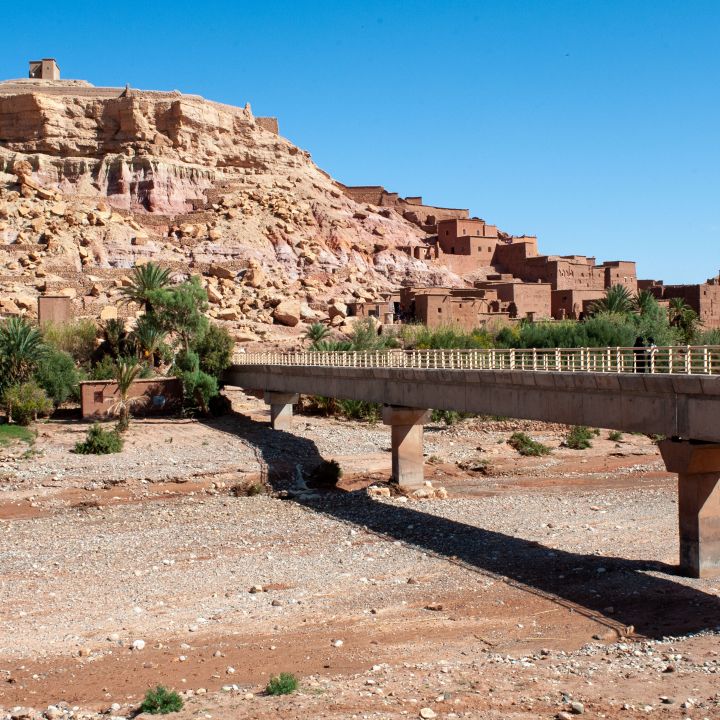
Skoura has the ruins of the magical Kasbah Amerhidil and other superb Kasbahs on its doorstep and it is an excellent base from which to explore the Dades Valley, the Valley of the Roses; the Dades Gorge, and the Todra Gorge to the east, the Draa valley to the south or the World Heritage Site at Ait Benhaddou.
Climate
The best time to travel to Skoura is between September and June, since temperatures can be excessive outside this period. However the oasis enjoys a microclimate, thanks to the palm trees and weather systems being cooled by cold air flowing off the Atlas Mountains, making it much cooler than the nearby Ouarzazate. Rain falls mainly between December and March, which tends to be the wettest months.


Location
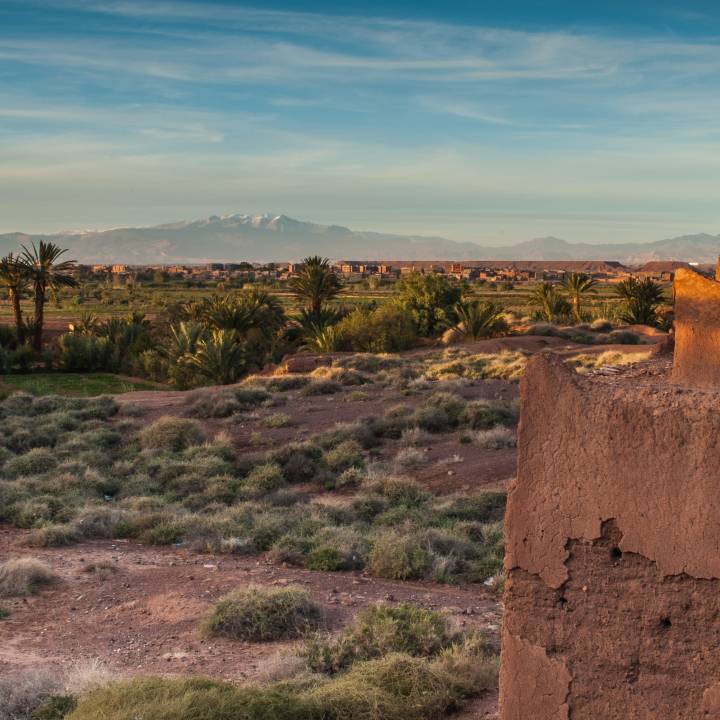
Skoura is located at the gateway to the Southern Moroccan desert, 40km east of Ouarzazate, in a palm filled oasis
Skoura is a breathtaking oasis with 4500 hectares of palm trees. It was the transit for camel caravans connecting the Mediterranean and the Atlantic Ocean to Sub-Saharian Africa long before the Almohad Sultan Yacoub El Mansour’s reign (1160-1199).
You can learn about the oasis’s traditional irrigation system when you visit Skoura, Called the Khettara, a true underground aqueduct dug coming from the Atlas Mountains. The Persians were the first to use this technique. The technique was first introduced during the Roman Empire in Tunisia, then in Spain and Morocco. This old method drains the water needed for oasis irrigation underground, with wells drilled regularly to ensure sufficient water flow, which is essential for the gardens of this magnificent palm grove to grow.
Along the way, you will pass through villages, abandoned houses, and sun-dried bricks, as well as cultivated gardens with almond, fig, olive, and date palm trees. You will be able to hear over a hundred different bird species twittering, chirping, cooing, croaking, and chattering.
Itinerary Inspiration featuring Skoura
09 Medinas, Gorges & Desert
10 Marrakech, Desert & Fez
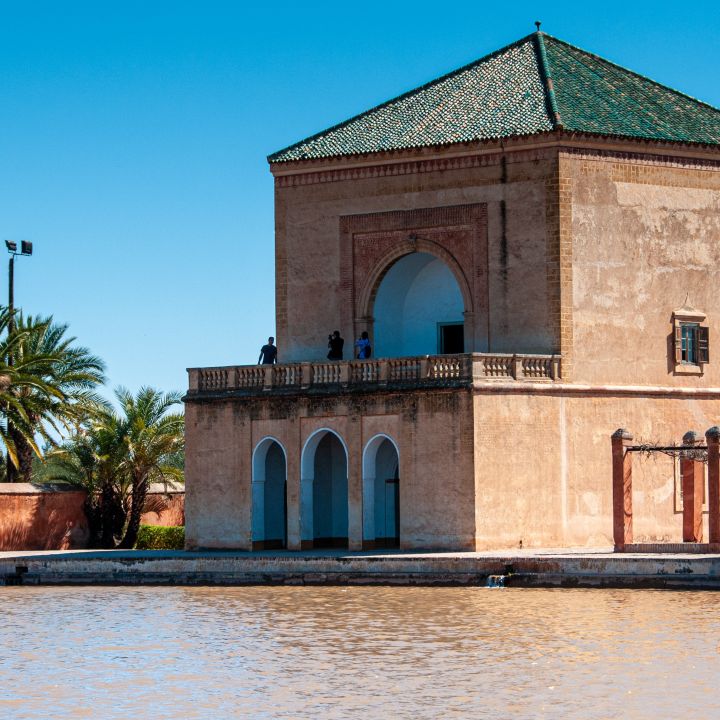
13 Grand Tour of Morocco

14 A Kingdom of Kasbahs
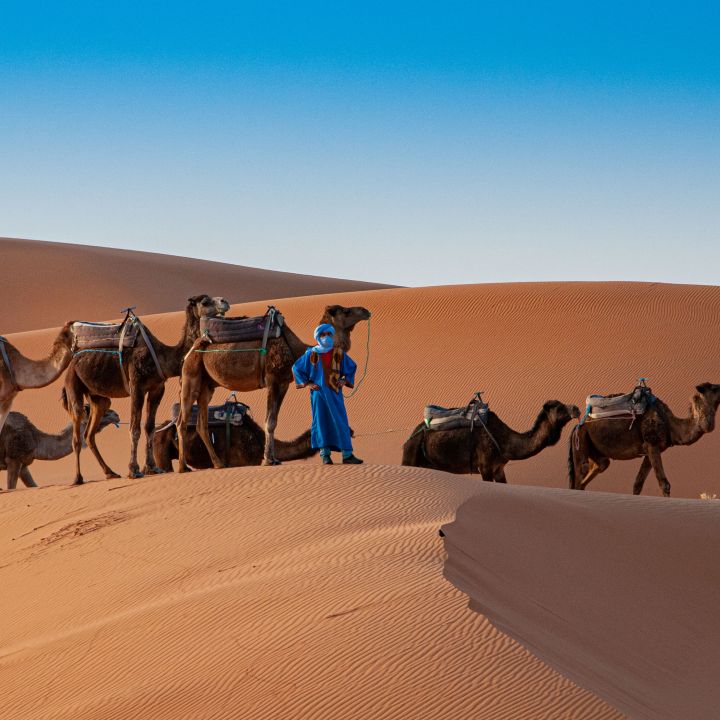
17 Ancient Cities, Desert & Mountains




Call (+44) 01239 710814 or Email and let's discuss your perfect holiday today....
100% Tailor-made
- Your entire holiday is designed around your requirements
- Explore your interests at you own speed
- Select your prefered style of accommodation
- Create the perfect trip with the help of our specialists
Fully Protected
- All flight-inclusive trips are ATOL protected (6228)
- 24/7 emergency UK contact number while abroad
- Established for over 25 years
Expert Knowledge
- All our specialists have travelled extensively or lived in their specilaist regions
- You will have the same specialist throughout the planning process
- Make the most of your time and budget